UX/UI · Ethics
Dark Patterns in UX: The Ethics of Persuasive Design
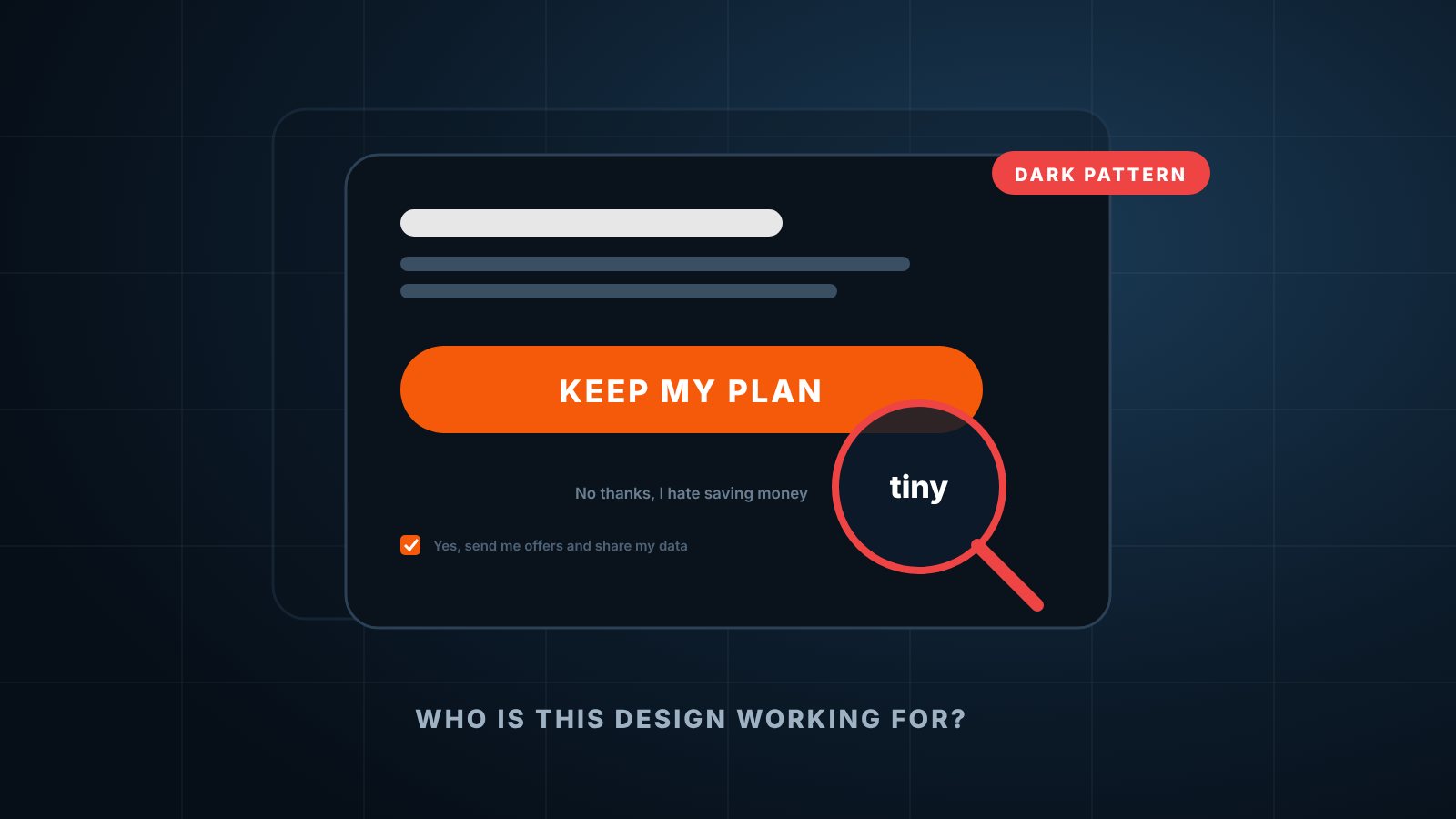
Not all UX design is created with good intentions.
Dark patterns, deceptive design practices that manipulate users into actions they wouldn’t normally take, have become increasingly common. While persuasive design can be used ethically to enhance user engagement, it can also exploit users’ psychology for profit. Understanding the difference is crucial for responsible design.
01What Are Dark Patterns?
Dark patterns are UX tactics that trick users into making unintended choices. They can be found in subscription traps, misleading buttons, and sneaky opt-ins. These tactics damage user trust and can even lead to legal consequences. Ethical design, on the other hand, puts transparency first and leaves the decision to the user.
02Common Types of Dark Patterns
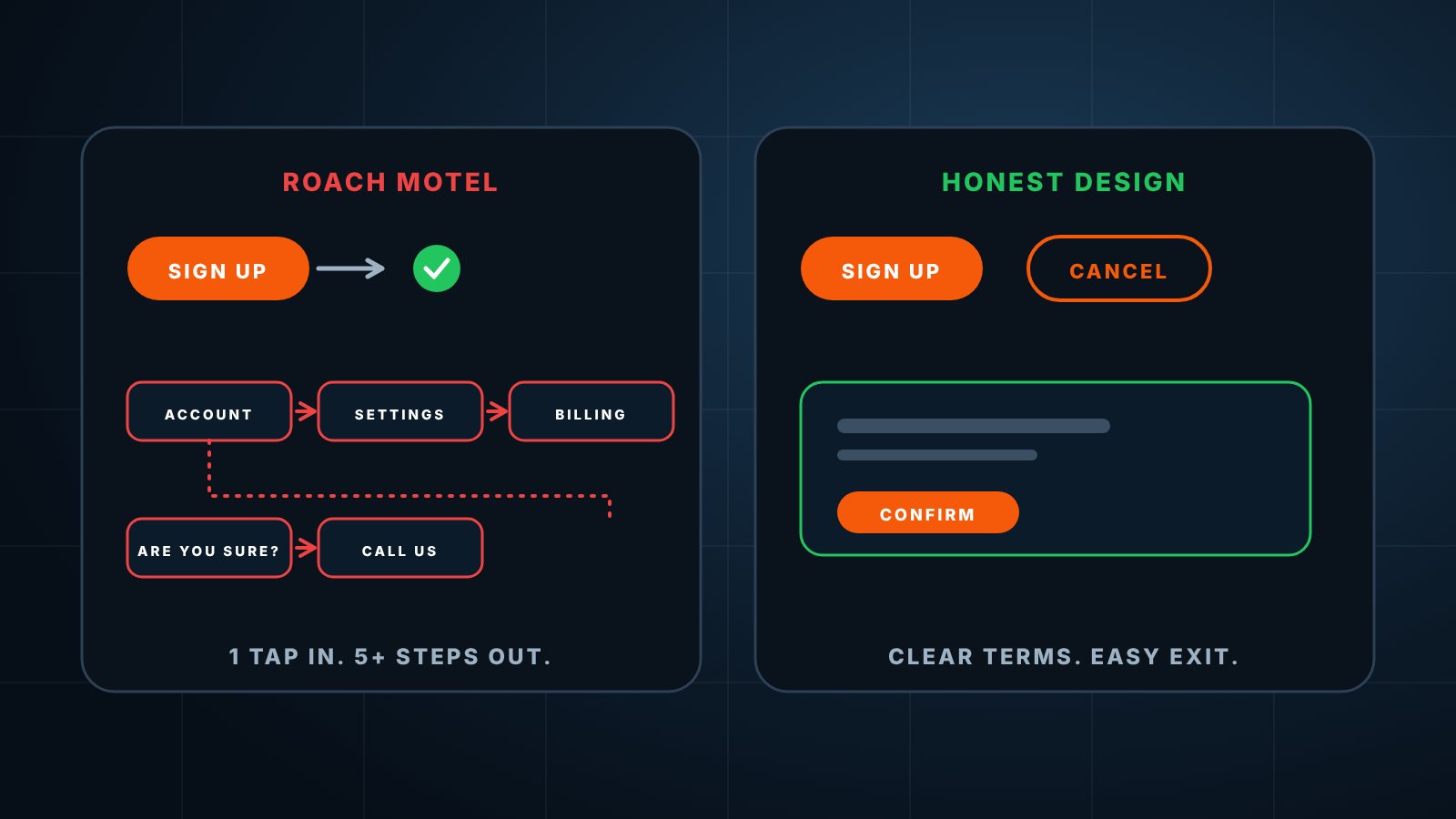
- Roach Motel Easy to sign up, but nearly impossible to cancel. Many subscription-based services make it simple to join but require multiple steps to opt-out.
- Misdirection Using design to focus attention away from important details (e.g., hiding extra fees until checkout). This is often seen in airline booking websites where additional costs appear late in the process.
- Forced Continuity Automatically charging users after a free trial without clear warnings. Many streaming platforms enroll users in paid subscriptions without upfront reminders.
- Confirmshaming Guilt-tripping users into actions (e.g., “No thanks, I hate saving money.”). This technique is commonly used in newsletter pop-ups and donation prompts.
- Disguised Ads Ads that look like real content to trick users into clicking. These are often found in news websites where sponsored content blends into editorial articles.
03The Ethics of UX Design
Designers have a responsibility to create ethical experiences that prioritize user well-being. Instead of dark patterns, they should focus on:
- Transparency Clearly communicate terms, costs, and policies without hidden conditions.
- User Control Allow users to make informed decisions without coercion or misleading tactics.
- Trust-Building Design experiences that prioritize long-term relationships over short-term gains.
- Accessibility & Inclusion Make designs clear and easy to navigate, and think about the needs of all users, including people with disabilities.
04Case Studies: Companies That Got Caught
Facebook’s Privacy Scandals
The company has faced backlash for complex privacy settings that make it difficult for users to manage their data.
Amazon’s Prime Cancellation Maze
Amazon was criticized for making it confusing and time-consuming for users to cancel their Prime memberships.
LinkedIn’s Email Spam Tactics
LinkedIn was sued for sending unsolicited invitation emails on behalf of users, leading to concerns over deceptive user interactions.
05Designing for Good: Ethical Persuasive Design
Persuasive design isn’t inherently bad. It can be used to encourage positive behaviors. For example:
Fitness Apps Using Gamification
Apps like Fitbit use progress tracking and social competition to encourage healthy habits.
Sustainable Shopping Nudges
E-commerce sites highlight eco-friendly products to guide users toward ethical choices.
Mental Health & Well-Being
Apps like Headspace use positive reinforcement to build mindfulness habits.