Design Process

A human-centered approach that combines research, creativity, and validation to create meaningful digital experiences that solve real problems.

Design Philosophy

Human-Centered

Every decision is made with the user’s needs, goals, and context at the forefront.

Evidence-Based

Designs are validated through research, testing, and data to ensure effectiveness.

Iterative

Continuous improvement through feedback loops and incremental design.

7-Stage Design Process

  1. Stage 1: Discovery & Research

    Understanding the problem space and user needs

    Key Methods

    • User Interviews
    • Surveys
    • Market Research
    • Stakeholder Mapping

    Deliverables

    • Research Plan
    • Competitive Analysis
    • Stakeholder Interviews
    • User Personas
    Designer studying a wall of research notes, sketches and screenshots
  2. Stage 2: User Research & Analysis

    Deep dive into user behaviors, motivations, and pain points

    Key Methods

    • User Testing
    • Analytics Review
    • Card Sorting
    • Affinity Mapping

    Deliverables

    • User Journey Maps
    • Empathy Maps
    • Research Insights
    • Problem Definition
    Research wall moving from sticky notes and insights to wireframes and screens
  3. Stage 3: Ideation & Concept Development

    Generating and evaluating creative solutions

    Key Methods

    • Design Thinking Workshops
    • Brainstorming Sessions
    • Crazy 8s
    • How Might We

    Deliverables

    • Concept Sketches
    • Feature Prioritization
    • Information Architecture
    • Task Flows
    Glowing light bulb in front of a whiteboard covered in idea sketches
  4. Stage 4: Design & Prototyping

    Creating visual designs and interactive prototypes

    Key Methods

    • Sketching
    • Digital Wireframing
    • Visual Design
    • Component Design

    Deliverables

    • Wireframes
    • High-Fidelity Mockups
    • Interactive Prototypes
    • Design System
    Designer desk with an interactive mobile prototype on screen and paper wireframes
  5. Stage 5: Testing & Validation

    Validating designs with real users and stakeholders

    Key Methods

    • Usability Testing
    • A/B Testing
    • Heuristic Evaluation
    • Accessibility Audit

    Deliverables

    • Test Results
    • Iteration Plan
    • Usability Report
    • Recommendations
    Usability test participant using a phone app while a researcher takes notes
  6. Stage 6: Implementation & Handoff

    Supporting development and ensuring design fidelity

    Key Methods

    • Developer Collaboration
    • Design QA
    • Documentation
    • Component Library

    Deliverables

    • Design Specs
    • Asset Library
    • Documentation
    • QA Support
    Designer and developer reviewing a UI design and its code together
  7. Stage 7: Launch & Optimization

    Monitoring performance and iterating based on data

    Key Methods

    • Analytics Monitoring
    • User Feedback Collection
    • Performance Testing
    • Continuous Improvement

    Deliverables

    • Performance Metrics
    • User Feedback
    • Optimization Plan
    • Success Report
    Analytics dashboard with rising performance charts on a desk monitor

Research Methodologies

Quantitative Research

Data-driven insights through measurable user behaviors and preferences.

  • Analytics Review
  • A/B Testing
  • Surveys
  • Card Sorting
  • Tree Testing

Qualitative Research

Deep understanding of user motivations, emotions, and contexts.

  • User Interviews
  • Usability Testing
  • Ethnographic Studies
  • Diary Studies
  • Focus Groups

Collaborative Methods

Cross-functional alignment and shared understanding of user needs.

  • Design Workshops
  • Stakeholder Interviews
  • Journey Mapping
  • Service Blueprinting

Tools & Software

  • Figma

    Design & Prototyping

  • Miro

    Collaboration & Mapping

  • Maze

    User Testing

  • Hotjar

    Analytics & Heatmaps

  • Confluence

    Documentation

  • Zeplin

    Handoff Tool

  • Jira

    Project Tracking

  • Creative Cloud

    Designer’s Essential

Design Artifacts & Documentation

Designer placing a sticky note on a printed user journey map with stages and an emotion curve

User Journey Maps

Comprehensive mapping of user touchpoints, emotions, and pain points throughout their interaction with the product.

  • Touchpoint Analysis
  • Emotion Mapping
  • Opportunity Identification
Hand sketching a site structure and user flow on a tablet

Information Architecture

Structured organization of content and features to create intuitive navigation and findable information.
  • Site Maps
  • Card Sorting
  • Navigation Design
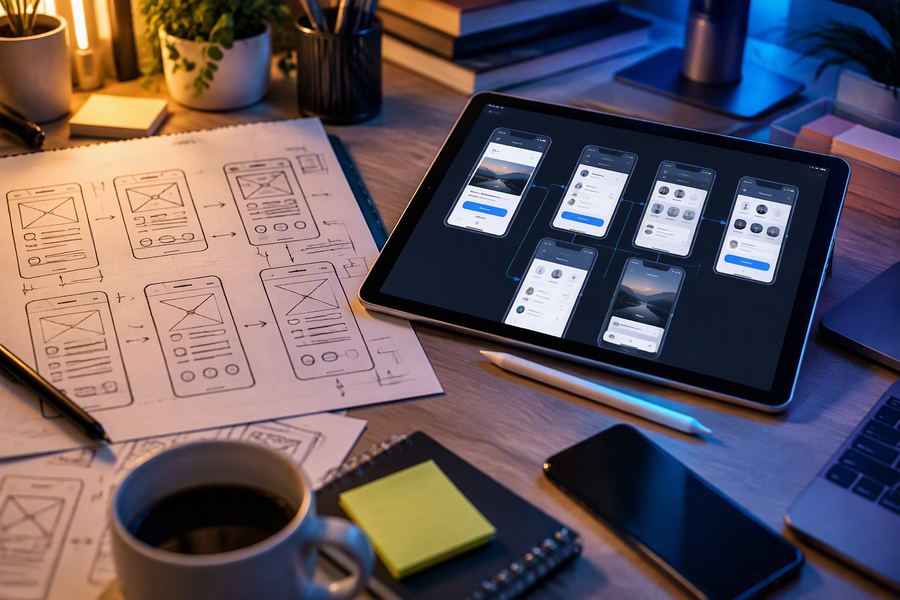
Hand-drawn mobile wireframes beside a tablet showing the same screens as a connected high-fidelity prototype

Wireframes & Prototypes

Low- and high-fidelity representations of design concepts, from initial sketches to interactive prototypes.

  • Lo-fi Wireframes
  • Interactive Prototypes
  • Design Systems
Usability test with a participant using a phone app while a researcher reviews a heatmap on a laptop

Testing & Validation

Systematic evaluation of design solutions through various testing methods and user feedback collection.

  • Usability Testing
  • A/B Testing
  • Accessibility Audits

Ready to Start Your Project?

Let’s collaborate to create user-centered solutions that drive real business results.